
~A Herstory~
What is Feminism
~A Herstory~ What is Feminism
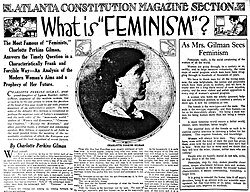
Feminism is the struggle for and belief in full social, economical, and political equality between men and women. In simple terms, feminism is the radical belief that women are people too.
Connecting Past to PResent
-
Beginning in the mid-19th century, women across the United States gathered in conventions, most notably along the East Coast, to demand recognition of their intellectual, moral, and political equality. These early activists challenged deeply rooted beliefs about women’s inferiority and argued that women possessed the same inherent strength, competence, and civic responsibility as men.
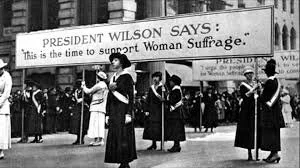
The movement gained national momentum after the 1848 Seneca Falls Convention, where leaders such as Susan B. Anthony and Elizabeth Cady Stanton emerged as powerful advocates for women’s rights. In 1869, Stanton and Anthony founded the National Woman Suffrage Association (NWSA), an organization dedicated to securing women’s right to vote through a federal constitutional amendment. Decades later, activists including Alice Paul would carry that fight forward with more militant strategies, helping push the movement across the finish line.
In 1920, the ratification of the 19th Amendment prohibited the federal government and states from denying citizens the right to vote on the basis of sex. While this marked a monumental victory for the First Wave, its protections were not equally realized because many women of color, particularly Black women in the South, continued to face voter suppression for decades.
The First Wave of Feminism laid the legal and ideological groundwork for future generations, reshaping American democracy and expanding the definition of citizenship itself. Currently, voting rights are under attack with a bill recently proposed in Congress.
-
The Second Wave of Feminism: Expanding the Meaning of Equality
The second wave of feminism, emerging in the 1960s and continuing into the 1980s, transformed the meaning of women’s rights in the United States and beyond. If the first wave focused primarily on suffrage, the second wave asked a broader question: What does equality actually look like in everyday life?
Women challenged discrimination in the workplace, fought for reproductive rights, demanded protections against sexual harassment and domestic violence, and pushed back against rigid gender roles. The movement helped lead to major legal and cultural shifts, including Title IX, expanded employment protections, and new public conversations about sexism that had long been dismissed as “just the way things are.”
Leaders and thinkers shaped this era in powerful and distinct ways. Gloria Steinem brought feminist ideas into mainstream media and co-founded Ms. Magazine, helping make women’s issues part of national political debate. Shirley Chisholm, the first Black woman elected to Congress and the first Black candidate to seek a major party’s presidential nomination, challenged both racism and sexism in politics, insisting that representation mattered. Starhawk, a feminist writer and activist, connected women’s liberation to environmentalism and spiritual practice, expanding the movement beyond legislation into questions of culture, power, and community.
The Equal Rights Amendment (ERA) was first introduced in Congress in 1923 to guarantee equal legal rights regardless of sex. It finally passed both houses of Congress in 1972 and was sent to the states for ratification, with a seven-year deadline (later extended to 1982). By 1977, 35 of the required 38 states had ratified it, but the amendment fell three states short when the deadline expired. Decades later, additional states resumed ratification efforts: Nevada in 2017, Illinois in 2018, and Virginia in 2020—bringing the total to 38, the three-fourths required by the Constitution. However, the ERA has not been formally codified in the Constitution because the original ratification deadline had already passed, and there is ongoing legal and political debate over whether Congress can retroactively remove or extend that deadline and whether earlier state rescissions are valid. As a result, despite reaching the necessary number of state approvals in 2020, the amendment has not yet been officially certified and published as part of the Constitution.
The second wave was not without internal tensions particularly around race, class, sexuality, and whose voices were centered. Those debates would shape later feminist movements. But its impact was undeniable: it shifted feminism from a fight for formal political rights to a broader demand for social, economic, and cultural transformation.
In doing so, it laid essential groundwork for later movements — including #MeToo — that continue to push the unfinished work of equality forward.
-
#MeToo: More Than a Moment
The #MeToo movement was not just a viral hashtag or a series of headlines about powerful men. It was the latest step in a long struggle for women’s rights.
For generations, women have fought for basic equality — the right to vote, to work, to be paid fairly, and to control their own bodies. Yet sexual harassment and assault have remained persistent barriers to that equality. They have silenced women, limited careers, and protected those in power.
#MeToo made visible what many already knew: sexual misconduct is not rare, and it is not just about individual “bad actors.” It reflects deeper systems of power that have allowed abuse to go unchecked. By speaking collectively, millions of women shifted the conversation from “Why didn’t she report?” to “Why were these systems allowed to protect abusers?”
From a feminist perspective, #MeToo marked a cultural turning point. It challenged the normalization of harassment, demanded accountability from institutions, and affirmed that equality means more than legal rights — it means safety, dignity, and the ability to participate fully in public life.
Like every major step in women’s rights, it sparked debate and backlash. But that, too, is part of social change.
#MeToo was not the end of the story. It was the next chapter.
-
Feminism Today: Culture, Power, and Accountability
Feminism today is both a continuation of earlier struggles and a response to new forms of power in a digital, global age. It lives not only in legislation and court decisions, but in marches, music, investigative reporting, and online movements that shape public consciousness in real time.
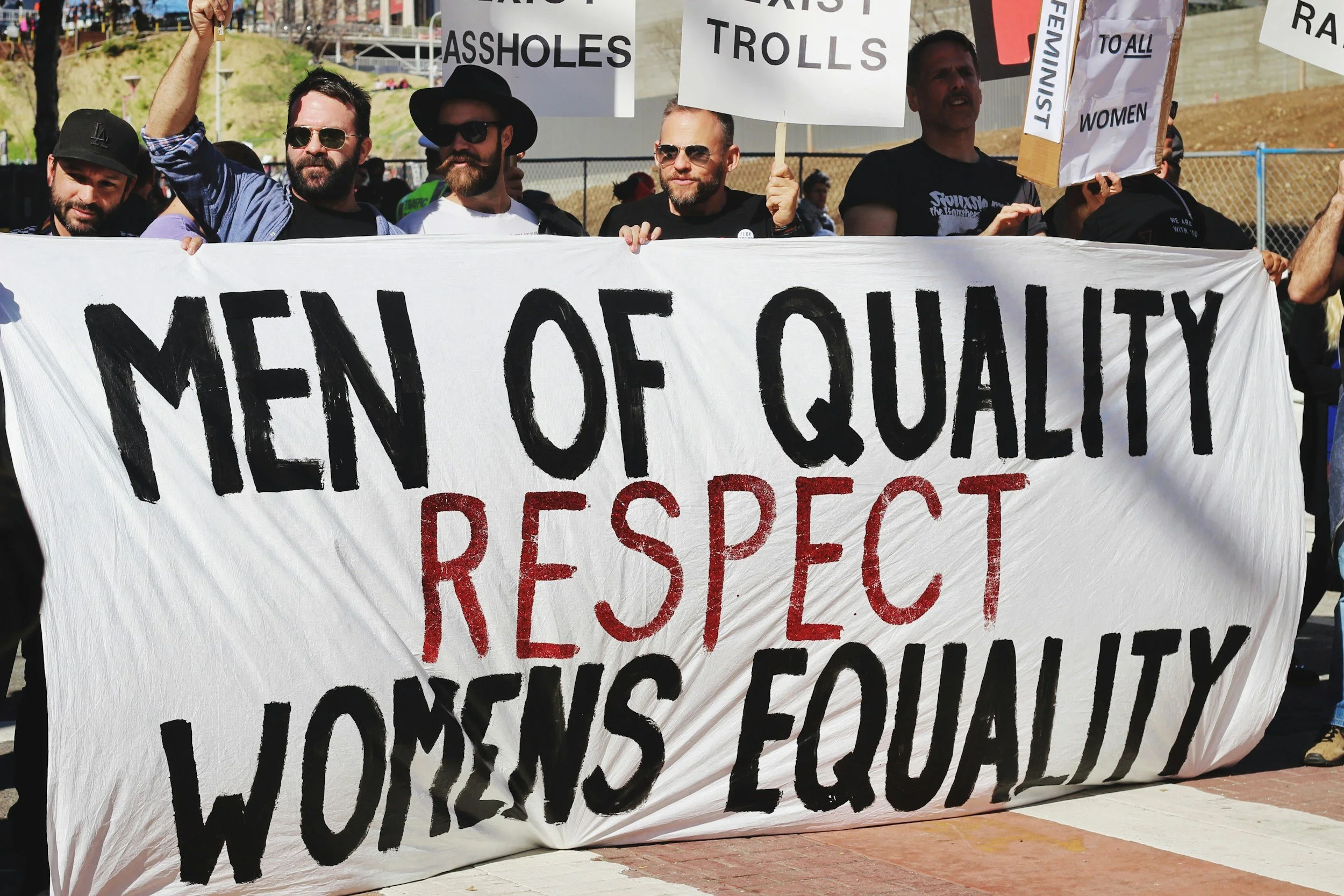
The Women’s March, first organized in 2017 and echoed worldwide, demonstrated the scale and diversity of modern feminist activism. Millions gathered across cities and continents, signaling that gender equality is not a niche issue but a global demand. The marches addressed reproductive rights, racial justice, LGBTQ+ equality, immigration, and economic fairness reflecting a more intersectional feminism that recognizes how systems of power overlap.
At the same time, culture has become a powerful vehicle for feminist critique. Songs like Paris Paloma’s “labour” capture the emotional and invisible work historically expected of women: caregiving, emotional management, self-sacrifice, etc and give language to frustrations that often go unnamed. Through social media platforms, such cultural expressions spread rapidly, allowing younger generations to engage with feminist ideas in ways that feel immediate and personal.
High-profile scandals, including the revelations surrounding Jeffrey Epstein and the powerful men connected to him, have also reinforced a central feminist argument: sexual exploitation and abuse are often sustained by wealth, status, and institutional protection. These events highlight ongoing concerns about accountability, transparency, and how power shields wrongdoing. They echo themes raised by #MeToo showing that abuse is rarely just about individuals, but about systems that enable them.
Feminism today operates at the intersection of activism, art, journalism, and law. It responds quickly to injustice, builds global solidarity through digital platforms, and continues to push institutions toward accountability. Like earlier waves, it faces backlash and division. But it remains rooted in a consistent demand: that women’s lives, labor, bodies, and voices be treated with full dignity and equal power.
The struggle is not static. It evolves with the world around it.
-
How to Get Involved in Feminism Today
Feminism is not just a belief, it is a practice. There are many ways to participate, whether you have an hour a month or want to dedicate your career to the work.
1. Start Local
Change often begins close to home.
Look for local women’s rights organizations, mutual aid groups, or community advocacy networks.
Volunteer at domestic violence shelters, reproductive health clinics, or legal aid organizations.
Attend school board or city council meetings when gender equity policies are discussed.
Local action is often where the most tangible impact happens.
2. Support National and Global Organizations
Many established organizations work on policy, legal advocacy, and public education. Examples include:
National Organization for Women (NOW)
Planned Parenthood
The ACLU (gender equality work)
UN Women
Global Fund for Women
Supporting can mean donating, signing up for action alerts, or participating in campaigns.
3. Advocate for Policy Change
Register and vote in local and national elections.
Contact elected officials about issues such as reproductive rights, workplace protections, paid leave, and gender-based violence laws.
Support candidates who prioritize gender equity.
Policy shapes lived equality.
4. Engage Through Culture and Education
Read and share feminist authors and journalists.
Support women artists, filmmakers, and musicians.
Challenge sexism in everyday conversations.
Have informed discussions about consent, labor equity, and representation.
Cultural change is often the foundation for legal change.
5. Use Digital Platforms Thoughtfully
Social media can amplify marginalized voices and mobilize support quickly. Follow credible feminist organizations, share verified information, and participate in campaigns that align with your values.
6. Center Intersectionality
Modern feminism recognizes that gender intersects with race, class, sexuality, disability, and nationality. Seek out and uplift diverse voices, especially those historically excluded from mainstream feminist spaces.
Feminism today is not confined to marches or viral moments. It lives in policy, culture, community work, and everyday choices. Getting involved does not require perfection — it requires participation.